

The University of Debrecen has recently signed a cooperation agreement with two Chinese universities in order to establish joint training programs with them. This agreement was signed on Thursday in the presence of the leaders of Beijing Institute of Technology (BIT) and East China University of Technology (ECUT). The joint program projects will hopefully start in 2027.
News

The dripping or leakage of urine during joyful laughter or a regularly recurring vaginal infection are not just inconveniences that make our everyday lives difficult, but genuine medical problems that can now be treated successfully, thanks to modern diagnostic and therapeutic options. Urogynecology, which, among other things, offers a potential treatment of these diseases, has recently become one of the most dynamically developing specializations in Hungary at the Clinical Center of the University of Debrecen.
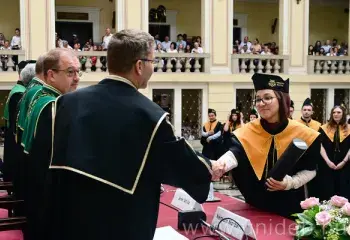
Graduates of the Faculty of Medicine took their oaths and received their medical degrees and diplomas on Saturday. There were more than 140 Hungarian and international students at the ceremonial faculty meeting, where degrees of Doctor of Medicine were conferred on them.

The 2026 Neuroinnovation Summit and the 11th NeurotechEU General Assembly was held as a two-day meeting in the Swedish capital city. The University of Debrecen was represented by a five-member delegation at this event hosted by Karolinska Institutet. The most significant message of the meeting for the University of Debrecen was the unanimous support of the founding partners and the rectors for the institution’s strategic role and its full reintegration in the future.

The physical and mental health and well-being of its staff and students are important to the University of Debrecen. To that end, the institution is introducing massage chairs as a new service at its campuses on Egyetem Square, Böszörményi Road, and Kassai Road, as well as in the Faculty of Engineering building in Ótemető Street. Specialists have installed nine of these relaxation devices on Wednesday.
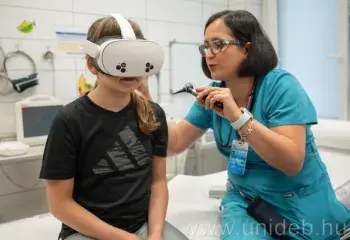
VR technology is now used at the Department of Pediatrics at the Clinical Center of the University of Debrecen to alleviate pain and anxiety associated with examinations and treatments. This innovative drug-free method will be available in several outpatient clinics and inpatient wards, which could facilitate care for hundreds of children every year. The program “VR Technology in Pain Management,” developed by One Foundation is coming to Debrecen, building on the professional expertise and experience acquired at Bethesda Children’s Hospital.

Specialists from the Department of Obstetrics and Gynecology at the Clinical Center of the University of Debrecen presented their latest research findings in the field of pediatric gynecology at the world congress for the specialty held in the United States. Their presentations at the international conference focused on modern treatment options for complex developmental anomalies where surgical solutions previously seemed impossible. The innovative procedures presented may open new horizons in the care of rare and severe gynecological developmental anomalies.

Leaders of eight European higher education institutions from the CARPE consortium (Consortium on Applied Research and Professional Education) convened for their annual meeting at the University of Debrecen from Wednesday to Friday. The professionals discuss the development directions for effective cooperation in the coming years.

The discussion held in Debrecen between the Vice Dean of Taipei Medical University and the Dean of the Faculty of Pharmacy at the University of Debrecen focused on the results achieved so far and the tasks ahead in the development of a new type of drug that is hoped to bring a breakthrough in the chemotherapy treatment of cancerous lesions.

An academic career model designed and built from high school onward, state-of-the-art laboratory facilities and direct connections to the international elite are combined to make up the objective of an agreement signed by the University of Debrecen and the city of Debrecen with Hungary’s National Academy of Scientist Education. Nobel Prize-winning American cell biologist Randy Schekman also attended the signing ceremony and gave an inspiring talk to Debrecen’s future researchers at our Learning Center.